Justin Mikos
  • Blog
  • Archives
  • About Me!
  • Blog
  • Archives
  • About Me!

Justin's Blog

Revisiting Every Mainline Metroid Game Ahead Of Dread

7/16/2021

 
Picture

​One of my favorite announcements from E3 2021 was Metroid Dread, the first new mainline Metroid game in nearly 19 years. The same night Dread was announced, I immediately started a Super Metroid playthrough and very quickly decided it was time to finally replay every mainline Metroid game in preparation. Aside from Super Metroid, which I replay nearly every year, most of the Metroid games I’ve only played once despite my love for them and other games inspired by them. Between my Switch, 3DS, and Wii U I was able to play through the four mainline games and their two remakes and I’m excited to share my thoughts on revisiting the games on my blog. I played these games in an unusual order (Super, Fusion, Zero Mission, Metroid, Metroid II, and Samus Returns), though for the purpose of this blog I’ll cover each of them in release order. Let’s get right into it!
Picture

Metroid (NES 1986/87, also on GCN, GBA, Wii, Wii U, 3DS, And Switch)

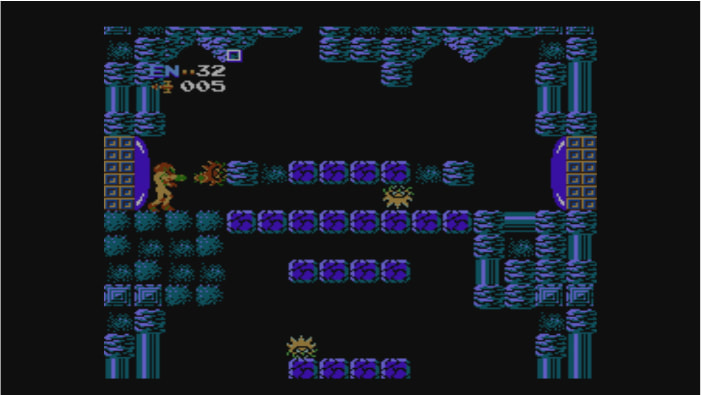
The original Metroid has been made available on so many platforms, but it wasn’t until this year that I finally beat it for the first time with the help of a fresh playthrough of Zero Mission, save states, and most importantly strong determination. I first played Metroid on the Gamecube where it was included as a bonus in Metroid Prime if you linked it to your copy of Metroid Fusion. I know I got as far as finding the Ice Beam and at least seeing Kraid’s Lair and Norfair, though I never progressed far in either region. The original Metroid is incredibly influential and still an amazing foundation for the series as it established the basic loop of collecting items to allow more exploration of the world where you’ll find more new items to continue the process. While the worlds in Metroid games are increasingly treacherous the deeper you explore them, you too are becoming more and more powerful until you eventually surpass the increasing difficulty as you get closer to the end of the game.

The original Metroid game is in some ways the most difficult Metroid game because even though it is in color, many of the rooms in the first Metroid look very similar to each other and there is no map. Without consulting a guide or downloading a map (the latter I wisely did for my Metroid II replay) your best bet is to really memorize the large vertical shafts in the game as best as possible. While they too aren’t the best of landmarks, as vertical shafts in the same region share features, they are certainly more memorable than the horizontal rooms that often look completely identical to each other. Not only is it very easy to get lost, it’s often not clear where you should be going at any given moment. As the Metroid formula became more refined with Super Metroid in particular, the number of new areas you can reach at any given moment is never quite as large as in the original Metroid since items and abilities aren’t gating progression as much as later games. Early on when your max health is low, enemies deal a lot of damage and it isn’t easy to recover health (there are no dedicated energy and ammo recharge stations), but this time I played I fully internalized and felt comforted that there are still a few rooms that have respawning bug enemies at nests which throughout the series is a good way to farm health and ammo drops in dangerous territory. While I didn’t download a map, I’m glad I consulted a guide at parts, because while every subsequent Metroid game including Metroid II does a good job of suggesting when you should bomb walls, it is absolutely not intuitive here which can grind progression to a halt.
Picture

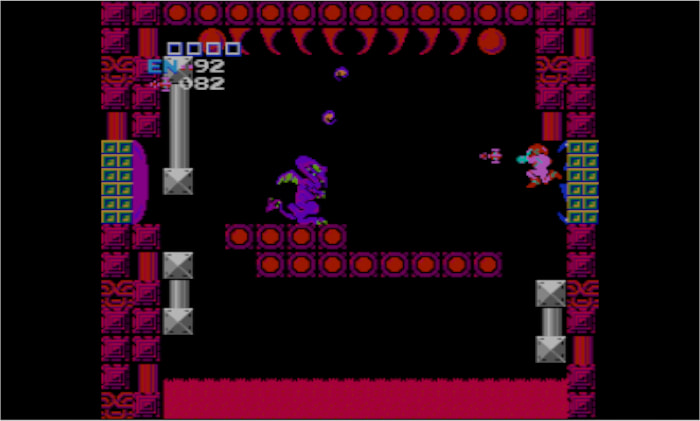
​While my patience was constantly tested, my determination this time helped me push through and finish Metroid for the first time and I’m glad I did. Grabbing the Varia Suit for the first time was huge as it drastically reduced damage from enemies, but what really gave me momentum to finish the game were the final two abilities, the Wave Beam and the Screw Attack, both of which completely change the game. Even with the Long Beam upgrade, which lets you shoot your power beam across the screen instead of barely a foot in front of you, it’s very hard to hit enemies as they zig and zag much faster than your bullets travel. The Wave Beam is a life saver as it weaves up and down as it rapidly travels across the screen and deals substantially more damage. The Screw Attack gives you immediate protection when jumping and is a powerful weapon as well as it rips enemies apart. Suddenly the oppressive world of Zebes feels under your control which gives you the confidence to take on Kraid and Ridley and their deadly lairs. The bosses themselves aren’t complicated, but they each offer good challenges different from the rest of the enemies. I also enjoyed finally playing through the original version of Tourian, the final area of the game and Mother Brain’s lair, as well as conquering the final escape sequence (which is thankfully and surprisingly very easy). Finally encountering and defeating the metroids as you approach Mother Brain feels novel as you need to re-fetch your Ice Beam to tackle them. Overall, while I don’t ever foresee myself replaying the original Metroid game as its punishing difficulty and lack of an in-game map and save points is off-putting, I’m so happy to finally have it under my belt to truly know the origins of the series and I did have fun finally conquering it.
Picture

Metroid II: Return of Samus (Game Boy 1991, also on 3DS)

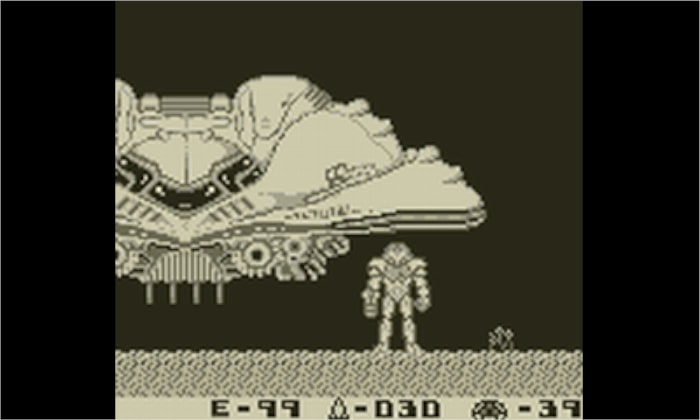
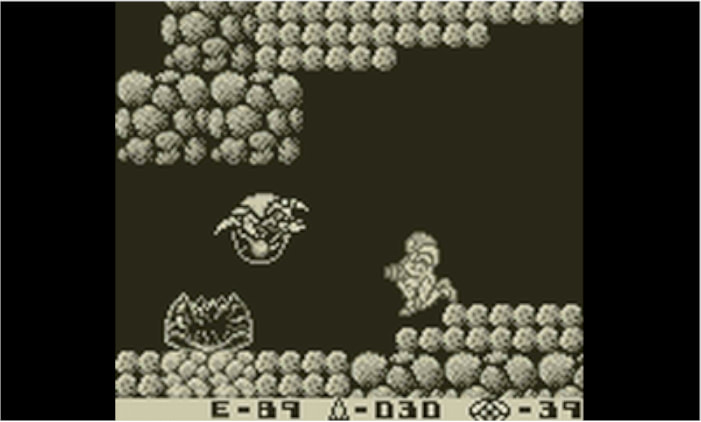
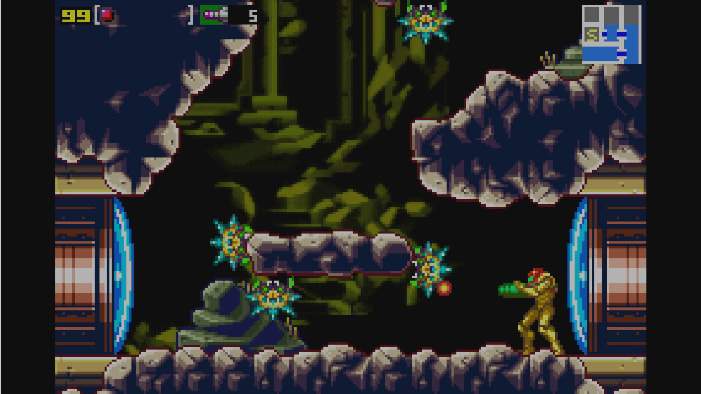
Growing up Metroid II was one of my favorite Game Boy games because it felt so smooth to play and it looked really good. I played through it at least twice, but it has been well over a decade since I last tried to beat it. Unless you were playing on the Super Game Boy or Game Boy Color, Metroid II like other Game Boy games is displayed in black and white and like the original Metroid it also does not have an in-game map. This is far less of a problem thankfully, because Metroid II has a unique structure compared to every other Metroid game. Samus is tasked by the Galactic Federation to wipe out every metroid on their homeworld, SR388, after realizing how much of a threat they posed to the universe following the events of the original Metroid. There is a counter constantly displayed on the bottom right corner of the screen of how many metroids remain, but more than that is how the game is built around this metroid hunt. There is a central shaft on SR388 where triumphant music plays that is filled with acid. Somehow, every time you eliminate all of the metroids in a given area the earth shakes and the acid level recedes to let you explore a new area and defeat more metroids. Essentially then, even if you do get lost in a given area, you know the moment the earth shakes you are good to exit out back to that main shaft and head to the next area. I’m still glad I downloaded a map because the rooms frustratingly don’t always map cleanly to a 2D grid, but I generally knew where I was at any given moment which makes the game flow much smoother.

Even with a cramped screen given how big Samus’ sprite is, Metroid II generally feels great to play and I love the items it introduced to the series. The biggest item that sets the game apart was the very powerful Spider Ball upgrade. Using the Spider Ball, Samus can literally roll up walls and travel across ceilings, provided there are no spikes in the way to block her progress. The Spider Ball makes you think about rooms differently as a result as you might be able to skip across deadly obstacles like lakes of acid and reach areas well beyond your sight. In that same vein, another power up I really love is the Space Jump which lets you infinitely jump in midair provided you don’t mess up the timing or collide into an enemy. Amazingly, both of these items are found fairly early on in the adventure despite how powerful they are which really opens up your ability to explore the much larger environments compared to the original Metroid. While the environments are harsher and more alien than the original Metroid since you are more powerful as a result, energy and ammo recharge stations and most importantly save points are thankfully all introduced in Metroid II which makes the journey far smoother.
Picture

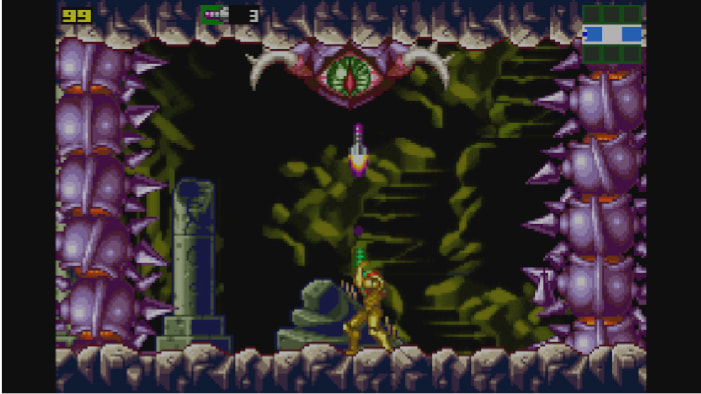
​While I much prefer having all unique boss battles to overcome as I conquer Metroid games, Metroid II’s metroid hunt is made interesting in that the metroids you encounter are at different stages of evolution. The floating jellyfish larva metroids evolve into alpha, gamma, zeta, and ultimately omega metroids across their lifespan and the different types are spread throughout SR388’s cavernous depths. Each metroid type has different attack patterns and generally hit harder the more evolved they are. I appreciated too that even with types you become familiar with, the game makes fights more challenging as it mixes up the arenas where you confront them. One especially cool metroid fight takes place entirely in the sand it hides in. You have to blast away the sand with your power beam, but it refills if you look away which can trap you if you aren’t careful. Even though it is terrifying, my favorite moment of the game is still the final showdown with the queen metroid which is basically a giant alien dinosaur that can even swallow you whole. You have to pump a ton of missiles into it to defeat the queen metroid so it is a true test of endurance and skill. While I don’t want to revisit the original Metroid again, I can definitely see myself revisiting Metroid II in the future. Even though you can get easily lost, I was happy to find the game is generally very fun and satisfying to play to this day.
Picture

Super Metroid (Super Nintendo 1994, also on Wii, 3DS, Wii U, and Switch)

Super Metroid is in constant battle with Super Mario 64 as my favorite game of all time. I played through it a ton of times growing up and I still regularly replay it every year or so and I always find new things that impress me about it as I play. Replaying this year on Switch I impressed myself by finally beating Super Metroid in under 3 hours for the first time which seemed like an achievement forever out of reach. When I was little, I had the Super Nintendo strategy guide laying out how to beat Super Metroid in less than three hours to get the best ending, but I always love to collect items in Super Metroid and explore every room which was completely at odds with their strategy and any of the Games Done Quick Any % speedruns I’ve enjoyed over the years. I still did some dumb, fun stuff in my latest playthrough like jumping into and exploring the acid lake in Ridley’s Lair and stubbornly attempting a few tricky wall jumps over and over (I’m relatively good with wall jumps after playing the game so much), but those distractions still didn’t pull me too far off my otherwise very efficient playthrough where I grabbed 91% of the items in 2 hours and 55 minutes. I’ve gotten 100% items on every Metroid game before so this successful run here inspired how I played the other five Metroid games this time which worked well for revisiting them back to back. (Incidentally, I also finished Metroid II and Zero Mission in less than 3 hours, Fusion in just over 3 hours, and Samus Returns in under 8 hours. Metroid II was 2 hours and 51 minutes specifically and I even got 100% items which I’m happy about!)
Picture

​It may play only on a 2D plane, but Super Metroid channels a similar energy to Super Mario 64 in that there is so much room for expression. I really appreciate that Super Metroid’s jumps are far wilder and less tight than the rest of the Metroid games that follow as it takes skill to optimize and perfect. Even before you consider advanced speed tech seen in speedruns, wall jumping in particular, which is a tight input, can help you reach many items ahead of the intended ways to acquire them. For example, I always grab the Spazer Beam before getting the High Jump Boots and the Spring Ball without getting the Space Jump, but there are plenty of other awesome uses for wall jumping as well, such as directly jumping up to the Speed Booster early which I did in my latest playthrough. Aside from shooting for the best ending, which isn’t hinted at in the game, Super Metroid is just so fun to play efficiently that it just naturally pushes you into becoming a master of it and every upgrade just makes playing the game feel even better.
Picture

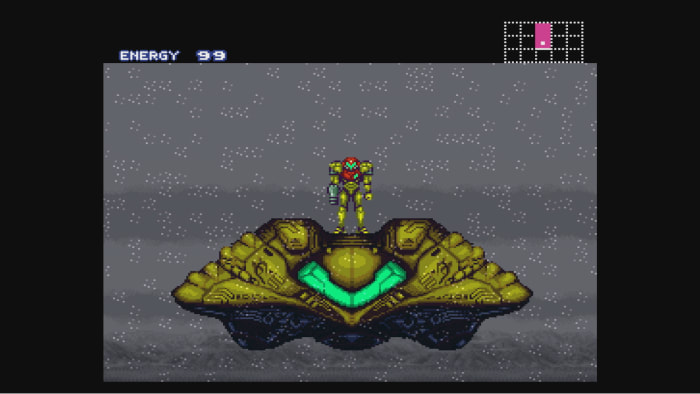
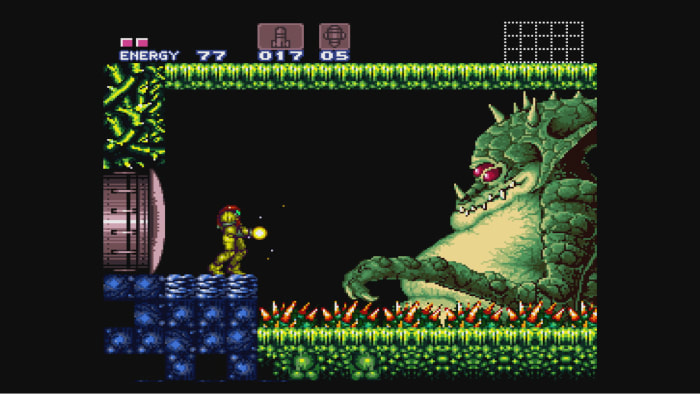
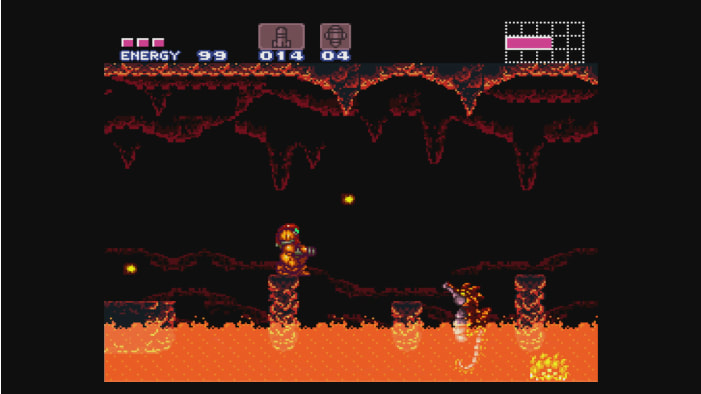
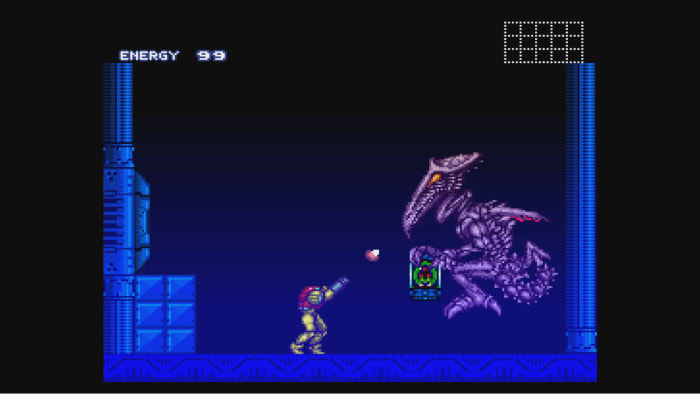
​One area I think Super Metroid excels the most at of the mainline Metroid games is in being a fully satisfying adventure. Planet Zebes offers incredibly distinct environments, from the oppressive lava filled Norfair to the peaceful, watery depths of Maridia. Every area is vividly brought to life with beautiful and evocative pixel art that sparks the imagination. The music is appropriately moody throughout and excitedly ramps up for the epic boss battles against terrifying monsters like the towering two screen tall Kraid and Samus’ eternal nemesis Ridley. The items you acquire over your journey constantly expand your options in exploration and often in combat as well (the power beam upgrades in particular stacking on top of each other was a cool and elegant addition). The world feels increasingly like your own more than other Metroid games as a result. There are also so many genuine moments that seem effortless in how well they are executed from Samus’ ship quietly touching down on Zebes in the rain, the surprising end to the battle with Crocomire, and of course the dramatic final showdown with Mother Brain.

There are few games that are just so joyous and satisfying to engage with as Super Metroid. I think I’ll always keep finding new things to appreciate about it and enjoy having new goals to shoot for as I play Super Metroid which is astounding. I didn’t need this particular replay to better inform how I feel about Metroid as I look forward to Dread, but all the same I’m so glad Dread’s announcement sparked my annual desire to replay Super Metroid because I finally accomplished beating the game under 3 hours and had an absolute blast as always.
Picture

Metroid Fusion (GBA 2002, also on 3DS and Wii U)

I never expected when I first played Metroid Fusion in 2002 on the same day as Metroid Prime (the most glorious day to ever be a Metroid fan) that it would have to stand nearly 19 years as the final mainline Metroid game. I didn’t like Fusion nearly as much as Super at the time of release because some of the key differentiators between it and Super, a heavier emphasis on story and a more linear mission structure, felt like steps back for the franchise and ultimately did lead to the absolutely dreadful low point of the entire franchise, Other M. As the years passed with no Metroid V in sight, my feelings on the game remained relatively harsh even though I still liked it. I tried a few times to do a replay on my 3DS, but always abandoned them for whatever reason. When Dread was finally announced, I had to know how I feel about Fusion today as I have more years of gaming and Metroid experience and with Fusion no longer having the burden of being the end of the mainline franchise.

When you start Fusion the most notable changes are that the jumping is far snappier and for the first time you can grab onto ledges. While it takes some of the finesse out of the game, the more precise gameplay is fun in its own right and feels good. I also appreciate, unlike Super which has two dedicated buttons for looking diagonally up and down, Fusion defaults the initial look to diagonally up when holding down the L button (which is where the majority of enemies will be) and by pressing down you switch to looking diagonally down. It can lead to some awkwardness at times during the intense boss battles, but it is a clever solution as less buttons are available on the GBA compared to the SNES controller. Another interesting gameplay change here is that missiles get upgrades that stack on top of each other like beams do. I like that missiles eventually handle the Ice Beam functionality from prior games for example because it is a useful tool to freeze enemies in the air, but it is much more satisfying to regularly be blasting enemies away with your default beam.
Picture

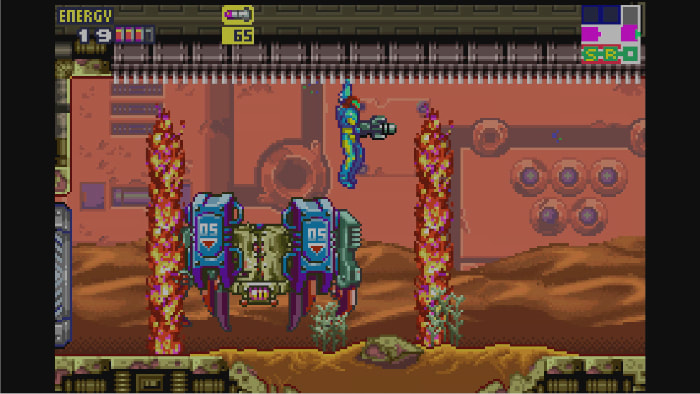
While I remain very down on the introduction of Adam, the new AI in Samus’ ship who will annoyingly lock her in the newly introduced navigation rooms until he gives her orders on what to do next (we never needed him before!!), and the more restricted linear nature of the game as a result, I did appreciate the moment to moment gameplay much more than I remembered. Metroid Fusion takes place entirely on a Galactic Federation research station in space rather than an alien planet. You arrive on the main deck area of the station and eventually reach a collection of elevators that lead to six different research sectors that are uniquely themed from a recreation of SR388’s main surface to more standard fire and ice levels. The station has been overrun with the X parasite that began to overwhelm SR388 after you wiped out the metroids in Metroid II (whoops) and each section of the game has you investigating or stopping them from spreading further or causing damage to the research station. When you enter a sector for the first time Adam will give you a basic map of the area and my favorite part of Fusion is that in all seven areas of the game you’ll begin to break out of the maps he gives you (noted by green tiles on the map) as you pursue your objectives. Venturing into uncharted territory is one of my favorite elements of Metroid games and given that some of the uncharted areas can easily be twice as big or more of the provided map of a given area and how breaking out is usually a puzzle in and of itself, I really connected this time with how it works. My favorite moments of Fusion are all tied to breaking out of the map including how it factors into a big story beat at the end.

When I originally played Fusion nearly 19 years ago, I wasn’t a fan of Metroid Fusion’s notably higher difficulty, but I definitely appreciate it now. Many of the bosses hit like trucks and a few bad moves can easily send you into a panic as huge chunks of your health are ripped away. While the designs of the bosses don’t speak to me the way Super Metroid or its same day contemporary Metroid Prime did, the boss fights themselves are engaging and require you to learn their aggressive, but usually sneakily simple patterns. Perhaps the coolest boss in the game is Nightmare who can enable a gravity device to have the missiles you shoot at him fall to the ground. Breaking away its mask reveals a goopy gross face that looks worse as the fight drags on. There are two fights though that are massive disappointments, a Ridley clone and the SA-X that is the reanimated remains of Samus’ original power suit by the X parasite that had infected her. While the game makes a big deal of the SA-X hunting Samus down, the few sections it appears often end quickly when you hide behind cover, and the final showdown is super easy as its patterns are just too simple. Ultimately, I had a much better time playing Metroid Fusion than I did during my initial playthrough. While there are parts of Fusion I just won’t ever fully agree with, namely Adam’s role in the story and gameplay, I think it’s ultimately still a fun game.
Picture

Metroid Zero Mission (GBA 2004, also on Wii U)

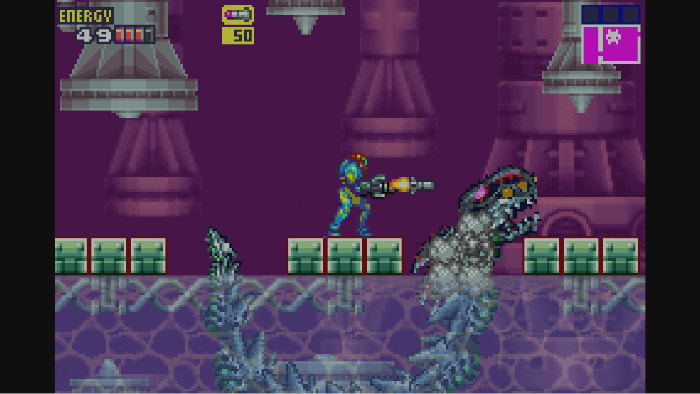
Zero Mission is a remake of the original Metroid and is an astronomical improvement over the original game even if the new epilogue scenario is very weak. The differences are subtle, but Zero Mission refines Fusion’s controls and movement to upgrade them from feeling good for what they are into something that just feels immediately excellent. Its values are different, but Zero Mission rivals Super Metroid for the best feeling game to play in the franchise. While the game begins with the rough layout of Zebes unchanged aside from the addition of Crateria, all of the rooms are substantially more designed and are littered with new puzzles and items to find. While you still have to take out Kraid and Ridley (now designed like their Super Metroid incarnations) before taking on an unaltered Mother Brain, there are many new mini bosses to overcome that are well designed and satisfying to conquer.
Picture

I had mixed feelings on the new epilogue content in Zero Mission back in 2004 and I still do today. Following Mother Brain’s defeat, Samus’ ship is shot down back to the planet and for some reason her power suit is damaged or destroyed leaving her stripped down to her skin tight Zero Suit and a gun that can only paralyze the space pirates. Through a combination of stealth and outmaneuvering them in their space ship and nearby Chozo Ruins, you’ll fight a lame Chozo ghost boss to restore all of your abilities and activate some new ones. This half of the new content just isn’t very fun despite the designers’ best efforts of creating unique paths to run and evade the space pirates through and I’ve always been conflicted on the sexualized design of the Zero Suit and its impact on the perception of Samus as a character (Smash Bros made Zero Suit Samus cool at least). Once your abilities return, you do get an awesome power trip as all of the space pirates that were hunting you down crumple under your full might. The final showdown with a Ridley robot is sadly another low point in this section as the battle is never interesting and you had a proper Ridley showdown in the game already.

For two hours or so then as it reimagines the original Metroid adventure, Zero Mission is on top of the world, but the new forty minutes of new epilogue content is honestly just subpar. I wish there was a hard break between the two sections of the game for this reason, but if you did want to go for 100% item completion like I did back in 2004 it is neat that you have all new abilities to use as you return to the rest of Zebes to clean up items. Despite its flaws, Zero Mission is a journey well worth taking as the main portion of the game is just that great.
Picture

Metroid: Samus Returns (3DS 2017)

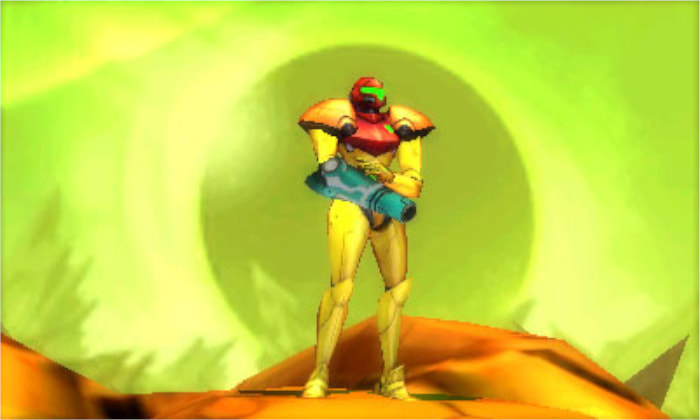
Like Zero Mission before it, Samus Returns is such a substantial reimagining of the game it is remaking, in this case Metroid II, that it might as well be considered a new game entirely. Even though I enjoyed it so recently, I was very interested in replaying Samus Returns before Dread because the same developer is handling both and they are clearly building off of their foundation here. The most controversial new change is the addition of a new melee counter ability for Samus that helps her repel charging foes. Since the screen real estate is so tight (a problem shared by the original Metroid II!) you have to be even more careful traversing SR388 as enemies hit very hard and have substantially more health in order for the melee counter to be necessary. While my other Metroid playthroughs were all finished around the three hour mark, I was just shy of taking eight hours to finish Samus Returns in large part due to this impact on pacing which is somewhat relatively exhausting.

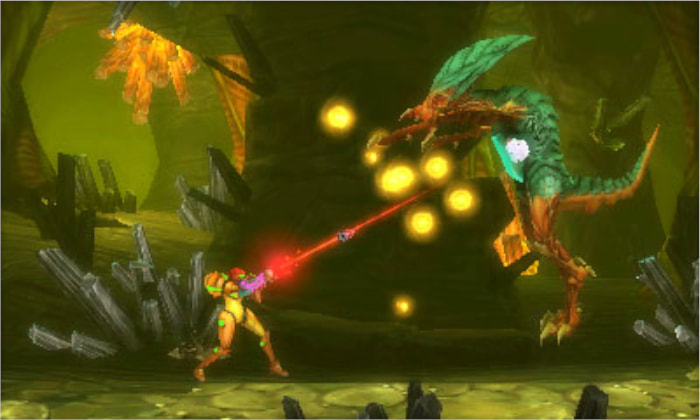
The longer journey is absolutely worth taking though, because overall Samus Returns feels great to play. For the first time in a mainline Metroid game, holding the L button makes Samus stand in place to enter a free aim state where you can shoot at whatever angle you are tilting the circle pad in. Precision aiming can make the game both easier and harder depending on the enemy you are facing, especially so when you are aiming for moving metroids and their weak spots. As you get used to moving the circle pad and learn their patterns, metroid fights switch from being a good challenge to becoming substantially easier when every missile you fire lands even as they introduce new moves and modify old ones. My one complaint is that the developers did completely run out of buttons as specific functions are mapped to every face button, the shoulder buttons, the d-pad (for swapping between the cool, new Aeion abilities), and most annoyingly the touch screen which you might need to hit in the heat of battle. Experiencing this control bottleneck again does make me very curious how Dread will play as Metroid developers for the very first time will have access to two control sticks, with clickable sticks, and four shoulder buttons.
Picture

​While Samus Returns keeps the general structure of the game, defeating metroids to lower the acid level in the central shift to reach a new area to repeat the process, the remake eventually substantially diverges from the original game in how you navigate the world and the obstacles within it. I mentioned in my Metroid II section I was surprised you get the Space Jump so early on in the adventure because the environment basically never is an obstacle again even though the terrain becomes more treacherous. At the same spot you would collect the Space Jump in Metroid II, you instead collect the Grapple Beam in Samus Returns which keeps Samus grounded much longer. I was more than fine with this, because Samus Returns is impeccably designed and offers a good challenge between navigating the world and solving puzzles that take advantage of all of Samus’ abilities. There are a few new boss battles in Samus Returns and all of the returning ones have new attacks and patterns which make them satisfying to overcome. I also really appreciate the presentation boost as well as the world suddenly has fully 3D backgrounds in color that offer an impressive sense of depth if you slide up the 3DS’ 3D slider. My only complaint is that the various backgrounds don’t really seem to gel together (is the cool water area with green grass everywhere really below a lot of lava zones?) and even though it’s still a super cool area which is what ultimately matters I was slightly bummed the most oppressively alien area in Metroid II was transformed into an abandoned Chozo base. I do have to give a shout out to the music in the game as the soundtrack reuses a lot of classic Metroid themes like Magmoor Caverns’ and Maridia’s themes to great effect.

Samus Returns is an excellent game and my second favorite mainline game overall despite my small complaints. It really captures what makes the Metroid games so fun and provides interesting new ideas like the melee counter and Aeion abilities that might be further developed in Dread at the least. While it seems like it will be locked to the 3DS given how it takes advantage of both screens and every possible input, I really hope Samus Returns will one day make its way to Switch as I think many missed out on it as one of the final 3DS games.

…

That concludes my latest blog! I hope you enjoyed reading my thoughts on all of the mainline Metroid games. I had an absolute blast revisiting them and feel so satisfied to finally have finished the original Metroid. I always enjoy hearing your thoughts and feedback, so be sure to reach out to me on Twitter @JustinMikos to share your Metroid thoughts and favorite memories as we get closer to Metroid Dread! Until next time!

Comments are closed.